The Wise Fool’s Folly: Exploring Shakespeare’s Paradoxical Wisdom
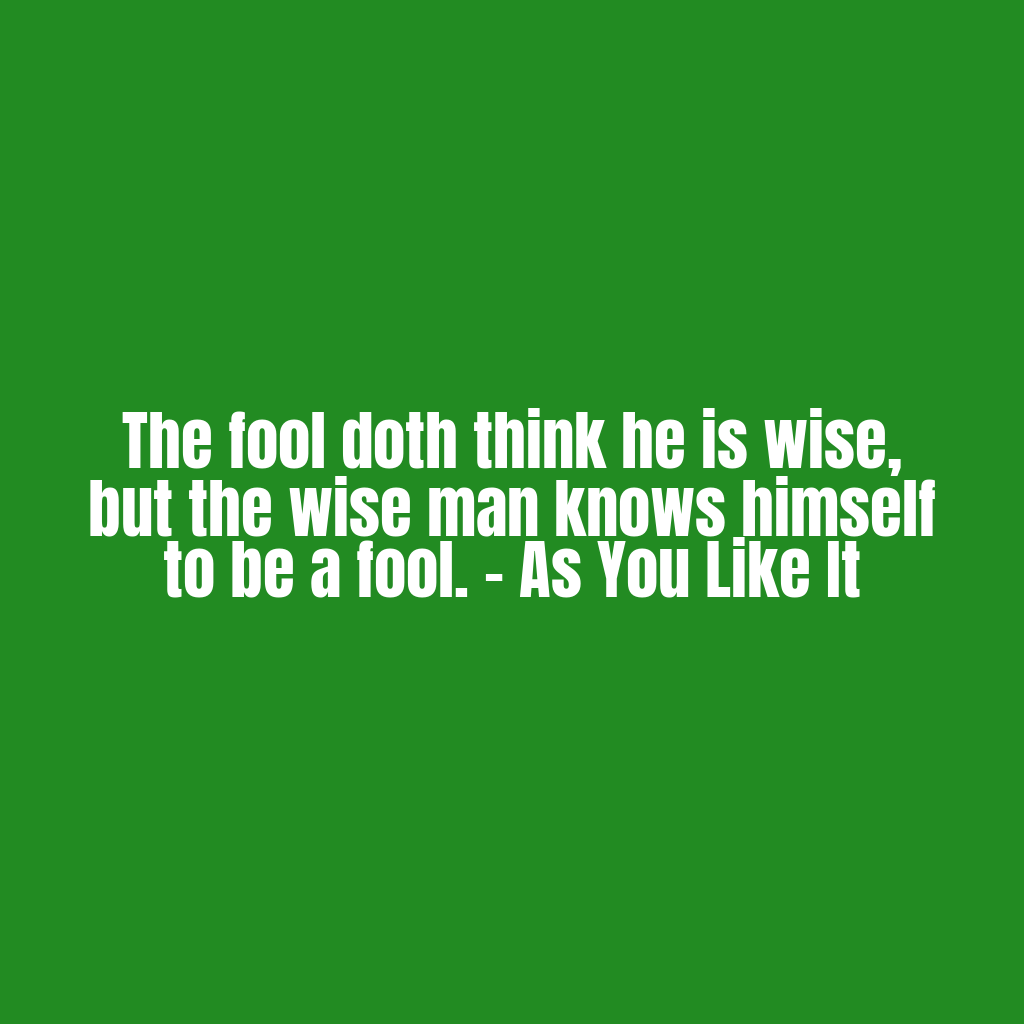
In the Bard’s whimsical comedy “As You Like It,” we are treated to a delightful exchange that packs a philosophical punch. The court jester, Touchstone, utters the immortal line: “The fool doth think he is wise, but the wise man knows himself to be a fool.”
This quip cuts to the core of a timeless truth – the difference between perceived and genuine wisdom. On the surface, it seems a straightforward roast of the self-important fool. But dig deeper, and you’ll uncover layers of insight that shine a light on the human condition.
The fool, in his arrogance, believes he has it all figured out. He struts about, spouting half-baked ideas and relishing his own perceived brilliance. Meanwhile, the wise man – humble in his understanding – recognizes the vastness of what he does not know. True wisdom lies not in feigned omniscience, but in the acknowledgment of one’s own limitations.
This paradox is echoed throughout history and philosophy. The ancient Greek thinker Socrates famously proclaimed, “I am wiser than this man, for I neither know nor think I know.” It’s a sentiment that rings true even today – the more we learn, the more we realize how much there is yet to discover.
In literature, this theme has manifested in myriad ways. From Cervantes’ “Don Quixote,” whose protagonist mistakes windmills for giants, to Dostoevsky’s “The Idiot,” which explores the notion of true purity amidst societal folly, the wise fool has captivated audiences for centuries.
But Shakespeare’s take is particularly poignant. Set in the pastoral Forest of Arden, “As You Like It” invites us to shed the pretenses of court life and embrace a more authentic existence. Touchstone, the jester, serves as a conduit for this message, using his apparent foolishness to expose the vanity and delusions of those around him.
In a world increasingly obsessed with the illusion of expertise and the constant pursuit of knowledge, Touchstone’s words carry a timely resonance. We would do well to heed his lesson – to approach life with a healthy dose of humility and an openness to the wisdom that can be found in the most unexpected of places.
So the next time you find yourself tempted to don the mantle of wisdom, remember the fool’s paradox. For it is in the acknowledgment of our own foolishness that we may just stumble upon true enlightenment.
Leave a Reply